






Slide
Slide
Slide
Slide


Welcome to Bright Minds Bombay
Online Therapy That Empowers Families and Transforms Lives
Bright Minds Bombay is an online therapy platform designed to make high-quality therapy accessible, affordable, and family-inclusive for children with developmental and communication challenges. We specialize in working with neurodivergent children, including those with autism, ADHD, social communication delays, and other developmental differences.
Our mission is simple but powerful:
To ensure that every child receives the support they deserve — and every parent or caregiver becomes confident and skilled in guiding that journey.
Through our online therapy model, families don’t just receive sessions — they gain insight, strategies, and the hands-on guidance they need to support their child in everyday life. When a caregiver sits alongside the child during therapy, they observe, learn, and get trained in real time. This collaborative approach bridges the gap between therapy sessions and home life — making progress faster, deeper, and more meaningful.
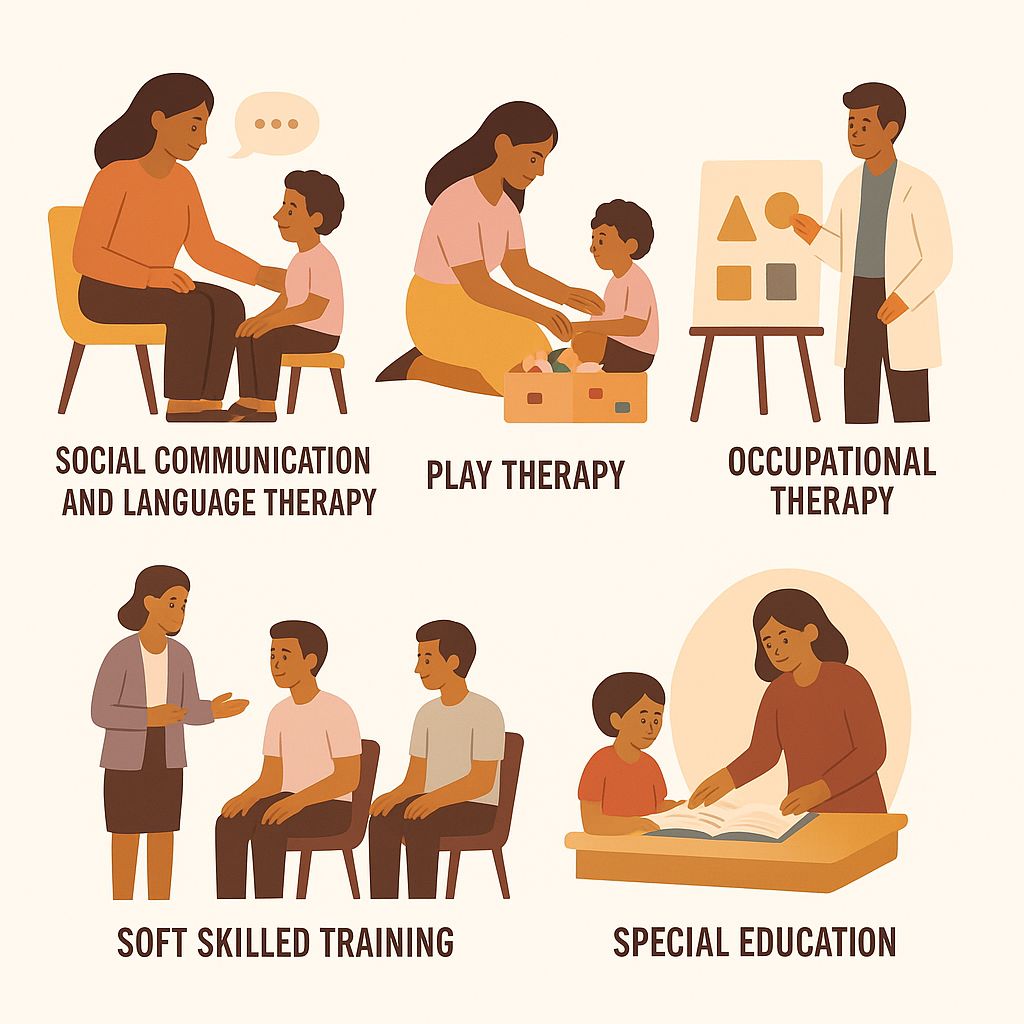
Our Services
What kind of Therapy we provide
Our Services
What kind of Therapy we provide

About the Founder
Syeda Farheen Alam Haque
Child Psychologist | Founder, Bright Minds Bombay | Mental Health Professional | Family-Centered Therapy Advocate| Author
Syeda Farheen is a certified Child Psychologist and Registered Mental Health Professional, accredited by the American Psychological Association (APA) and UNICEF. She began her career in Delhi, where she worked with diverse child populations before founding Bright Minds Bombay. Since 2018, she has delivered over 7,000 therapy sessions, supporting children with autism, ADHD, language delays, and social-communication challenges through Social Communication Language Therapy and Play Therapy.
A strong advocate of family-centered care, she empowers parents—especially mothers—to actively participate in the therapeutic process. Farheen now leads Bright Minds Bombay, offering fully online therapy services across India and globally. She is also the author of a book on early childhood development and learning, aimed at making therapy-informed strategies accessible to all families.

Building Skills, Confidence, and Connection — One Session at a Time.
"Timely therapy helps build skills, trust, and joyful everyday moments"
Client Reviews
What do people say about us
Farheen ma’am has been with us throughout this journey. She’s always available to answer our concerns, and the progress we’ve seen in our child has been heartwarming. We’ve been taking therapy sessions for a while, and the changes in him are truly remarkable.
Ayush’s Mother
0
+
FRUITFULL SESSIONS PER YEAR
0
+
YEARS OF EXPERIENCE
0
+
TRAINING & WORKSHOP SESSIONS
0
+
SATISFIED CLIENTS
Cancellation Policy
What is the cancellation policy for ongoing therapy sessions ?
1. Pre-Planned Commitments (No Cancellation Fee):
If cancellations are due to pre-planned commitments such as travel, school events, festivals, or if the child is unwell from the previous day, there will be no cancellation charges . However, I request you to inform me at least 24 hours in advance so I can plan accordingly.
2. Last-Minute Cancellations and No Shows:
- For cancellations due to sickness or unforeseen circumstances on the same day, please notify me at least 2 hours before the session to avoid a cancellation fee.
If cancellations are made less than 2 hours before the session , 50% of the session fee will be charged as the cancellation fee.
- If no information is provided and the therapist waits for the session time without notice, 100% of the session fee will be charged as the cancellation fee.
Frequently Asked Questions (FAQs)
Once the consultation fee has been paid, no refunds will be issued under any circumstances. Please ensure your availability before booking.
This therapy helps children who speak very few or no words(but has speech) . The goal is to teach them basic, functional communication—like asking for help, requesting the toilet, saying yes or no, or asking for something. It focuses on moving from one-word speech to simple sentences, making daily life easier for both the child and the parents.
For children who speak in sentences but struggle with social cues, this therapy builds conversation and pre-conversation skills—like asking questions, commenting, answering in detail, taking turns, and understanding what’s appropriate in different situations. It helps them become confident and effective communicators.
Refunds are applicable only if a payment has been made directly to a therapist outside the Bright Minds Bombay platform. A payment refund will only be issued when valid proof of payment is provided. Without proof, it will not be possible to process a refund.
No. Conducting therapy sessions outside Bright Minds Bombay is strictly discouraged. All sessions must be booked and completed through the Bright Minds Bombay platform to ensure quality, safety, transparency, accountability, and authenticity.
This therapy helps children who have the ability to speak but don’t use speech to communicate in real-life situations. It focuses on encouraging purposeful communication—like initiating conversation, expressing needs, and responding to others. The goal is to help the child use their speech meaningfully in daily interactions.
We use play as a method to deliver Social Communication Language Therapy, especially for children below 18. Play helps build meaningful language in a natural way. For older children or individuals above 18, who have outgrown play-based learning, we use structured strategies instead of play to build social communication skills.
Play Therapy is a type of therapy that uses play as the main tool to help children with social, communication, and language challenges. For children with special needs, play therapy helps develop both cognitive play stages (like exploring, pretending, and problem-solving) and social play stages (like parallel play, cooperative play, and group
Therapists guide the child from the earliest forms of play to more advanced levels. While doing so, they also build the child’s ability to express, connect, and communicate effectively—especially for children with autism, ADHD, or speech delays.
interaction).
Play Therapy boosts a child’s reasoning, problem-solving, decision-making, comprehension, and understanding of features, functions, and categories—all through play. It helps children build language and improve social communication in a natural, engaging way.
As children move through the social stages of play (like turn-taking, associative play, cooperative play, and competitive play), they also develop essential social skills needed to interact with peers—such as observation, waiting, sharing, and teamwork.
Absolutely—online therapy can be very effective, even for very young children. If your child is too small to interact directly with the therapist, there’s no problem. In such cases, we work closely with the parent or caregiver.
Instead of expecting the child to sit still in front of a screen, we guide the parent during the session. The therapist watches the parent and child together (via camera) and trains the parent step-by-step to carry out the therapy activities.
Many parents become confident and skilled enough to support their child’s development independently. We’ve seen wonderful success stories where a well-trained parent became their child’s most effective therapist.
It’s absolutely fine! We don’t expect small children to sit still for 45 minutes. Moving around is natural, and most children do it—even in offline sessions.
Your child is in a comfortable, familiar space, and we simply guide the parent or caregiver to gently bring the child back to the activity. This is very normal, and part of how we work. Whether online or in-person, therapists always help redirect the child back into the session—there’s nothing to worry about.
Both online therapy and in-person (offline) therapy have their own benefits and limitations.
In in-person therapy, the child visits a therapy center and works directly with the therapist in a therapy room. The therapist often engages the child in effective activities, and the child may learn a lot during those 45-minute sessions. However, once the session is over, the child is handed back to the parent—who usually has little or no idea of what actually happened in the session. Detailed feedback and guidance for home activities may be given once or twice a week, but it’s often not feasible for therapists to provide daily, in-depth feedback or train parents regularly. As a result, the therapy rarely continues at home with the same effectiveness, and parents may feel lost about what to do next.
In contrast, in online therapy, the parent or caregiver is an active participant. They sit with the child throughout the session while the therapist guides them step-by-step. In this model, the parent becomes the main facilitator of the therapy, while the therapist observes, corrects, and supports in real-time. The therapist gives immediate feedback, points out mistakes, highlights improvements, and ensures that each goal and activity is being executed correctly.
Because the parent gains hands-on experience in every session, they become confident and skilled in continuing the therapy at home—long after the session ends. The entire process becomes transparent, and the strategies used are fully understood by the parent. If the parent wishes, the same techniques can be practiced repeatedly throughout the day, allowing for continuous, consistent progress.
So, while both formats work, online therapy empowers the parent, creates a stronger support system at home, and often leads to better long-term results—especially for young children and children with developmental delays.
No, you won’t need a lot of materials. Our therapists are trained to help you use simple, everyday items already available at home. In our approach, it’s not about the fancy toys or expensive tools—it’s about the process and how the activity is done.
For play therapy, we often use common household items like grains, sensory materials, and grocery items to create engaging and effective activities. This method is not just limited to online sessions—it has also been used successfully in physical therapy centers.
For social communication therapy and soft skill training, you generally won’t need to buy anything new. In some cases, if your child is taking occupational therapy, the therapist might suggest one or two helpful tools—but only if absolutely needed.
Our focus is always on making therapy practical, accessible, and stress-free for every family.
In Occupational Therapy, your child will develop skills that help them function more effectively in everyday life. The therapy focuses on improving fine motor skills such as holding a pencil, using scissors, or buttoning clothes, as well as gross motor skills like balance, coordination, jumping, and climbing. It also addresses sensory regulation to help your child stay calm, attentive, and focused. Alongside these, children are guided through essential self-help skills including eating, dressing, and using the toilet independently. Occupational therapy also works on increasing attention span, sitting tolerance, body awareness, and overall physical strength. These skills together help your child become more independent, confident, and capable in both home and outside environments.
Occupational Therapy for adolescents and adults focuses on helping individuals become more independent and functional in their everyday lives, both at home and in professional or academic settings. The therapy supports skills such as time management, organization, motor coordination, sensory regulation, workplace readiness, self-care routines, and emotional regulation. For individuals struggling with executive functioning or daily living challenges, this therapy builds practical strategies and strengthens their ability to handle real-life responsibilities with more confidence and control.
In our Soft Skill Training program, your child will learn essential life skills that build independence, confidence, and better social understanding. The sessions are designed to help children manage their time effectively, create and follow checklists, and solve everyday problems. They will learn to understand the difference between needs and wants, basic money handling, personal grooming, hygiene, and the importance of privacy. Along with this, we focus on developing communication and conversation skills, regulating emotions, understanding personal boundaries through the concept of relationship circles, exploring their personality, and becoming more self-aware. These skills are taught in a simple, interactive, and practical manner so the child can apply them easily in daily life.